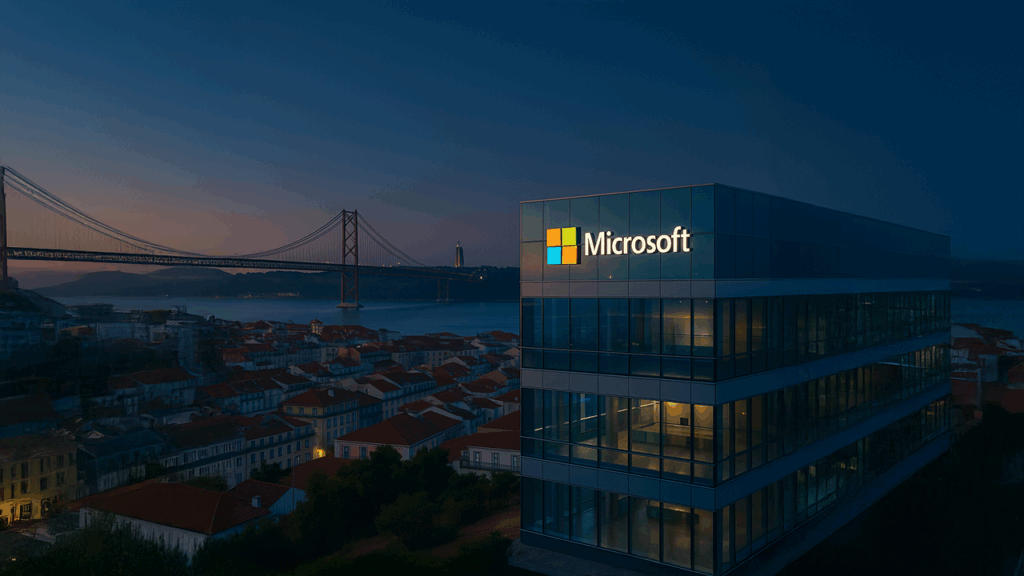
Portugal just stepped into the AI spotlight. Microsoft announced a multibillion investment in a new data center on the Atlantic coast. The choice for Sines is not random. The area connects to major subsea cables, offers room to scale, and has an energy mix that is getting greener every year. Those are the ingredients that heavy AI workloads need. This move also tells a bigger story. Demand for compute is still climbing, the race for power and connectivity is heating up, and Europe wants more control over its own infrastructure. In this piece you will see why Portugal is center stage, what this says about the MAG7, and where practical opportunities appear for investors who look beyond the usual tickers
Why Portugal is suddenly center stage
Sines has long been a logistics gateway to the Atlantic. With the rise of AI that position gains a new meaning. Data centers need three things at the same time. Stable electricity, fast fiber routes, and physical space to keep adding new generations of hardware. Portugal can deliver that mix with growing confidence. Policy pushes sustainability, the coastline links directly into international cables, and land is less scarce than in the classic data center regions. Add a mild climate and it becomes clear why cooling, cost, and scale come together here in a sensible way.
Connectivity and the power mix
AI models crave bandwidth. A coastal hub with direct cable routes to the Americas and Africa reduces latency and lifts reliability. At the same time the Portuguese power market is moving fast with solar and wind. For AI operators the number that matters is not only the price per kilowatt hour but the predictability over many years. The more stable that pipeline becomes, the easier it is to promise capacity to customers who cannot afford a single minute without GPUs.
Impact on the European AI landscape
For years hyperscalers piled into the same pockets in Northwest Europe. That created bottlenecks in grid capacity and permitting. With Portugal a southern center of gravity emerges that relieves pressure and opens a path for growth. For Europe this is a strategic shift. Data can stay in region more often, companies can train and deploy closer to users, and an ecosystem of suppliers, maintenance, and specialized services takes shape. This is more than a building with servers. It is long term infrastructure that supports jobs, know how, and exports.
What this signals about the MAG7 and the US market
With projects like this the MAG7 show that the AI cycle is far from over. You do not greenlight an investment of this size unless you expect compute demand to stay high. It points to a next phase where capacity moves closer to the end user. European industry, government, and startups want to run locally for reasons of speed, cost, and regulation. The largest tech firms will keep building worldwide, even if debate in the US shifts back and forth on timing and priorities.
Demand for compute keeps rising
Each new wave of use cases pulls more infrastructure into production. Companies switch on internal assistants, factories automate visual checks, and media groups create content with generative models. Workloads shift from experiments to daily operations. Plain vanilla cloud is not enough. You need specialized facilities for AI training and inference, with fast storage and short paths between chips, network, and data.
Opportunity across the infra value chain
Do not focus only on the brand that erects the building. Think fiber, optical components, energy infrastructure, cooling, real estate development, security, and software that schedules and measures capacity. New winners are emerging across this chain. European specialists with niche expertise can plug in because proximity matters here. For investors that is the signal to watch the entire value network alongside the famous names. Not through wild speculation, but by understanding which links benefit structurally from this shift in where capacity gets built.
What this means for investors in the Benelux
The playbook is calm and focused. Big headlines stir emotions, but under the hood the questions are practical. Where does the electricity come from, how will cable routes expand, and who ships proven technology that scales in the real world. The Benelux hosts suppliers in energy, semiconductor equipment, networking, construction, and data center services. It pays to see which names already have relationships in Southern Europe or other growth regions across the continent. It also helps to track policy in Brussels. Rules around data and sustainability can speed up or slow down the roadmap for new locations and that guides where capital flows first.
Conclusion
The announcement in Portugal is not a one off. It fits a clear trend where AI infrastructure spreads across multiple European hubs. That reduces risk, lifts the firepower of European companies, and places the MAG7 closer to the customer. For investors the core is simple. The hunger for compute continues, the competition for power and fiber intensifies, and the value network around data centers matters more than ever. If you understand that network you will spot where the next crane rises and which players can keep investing for years. This theme goes beyond a single sector or a single country. It is the build out of production capacity for data, as tangible as a factory. That is why it is a story you will want to track in the years ahead.
Want faster context on headlines like this and a direct line to useful data. Visit Bitease for the economic calendar, the broker comparison, and the asset index, and get yourself ready for the next step.